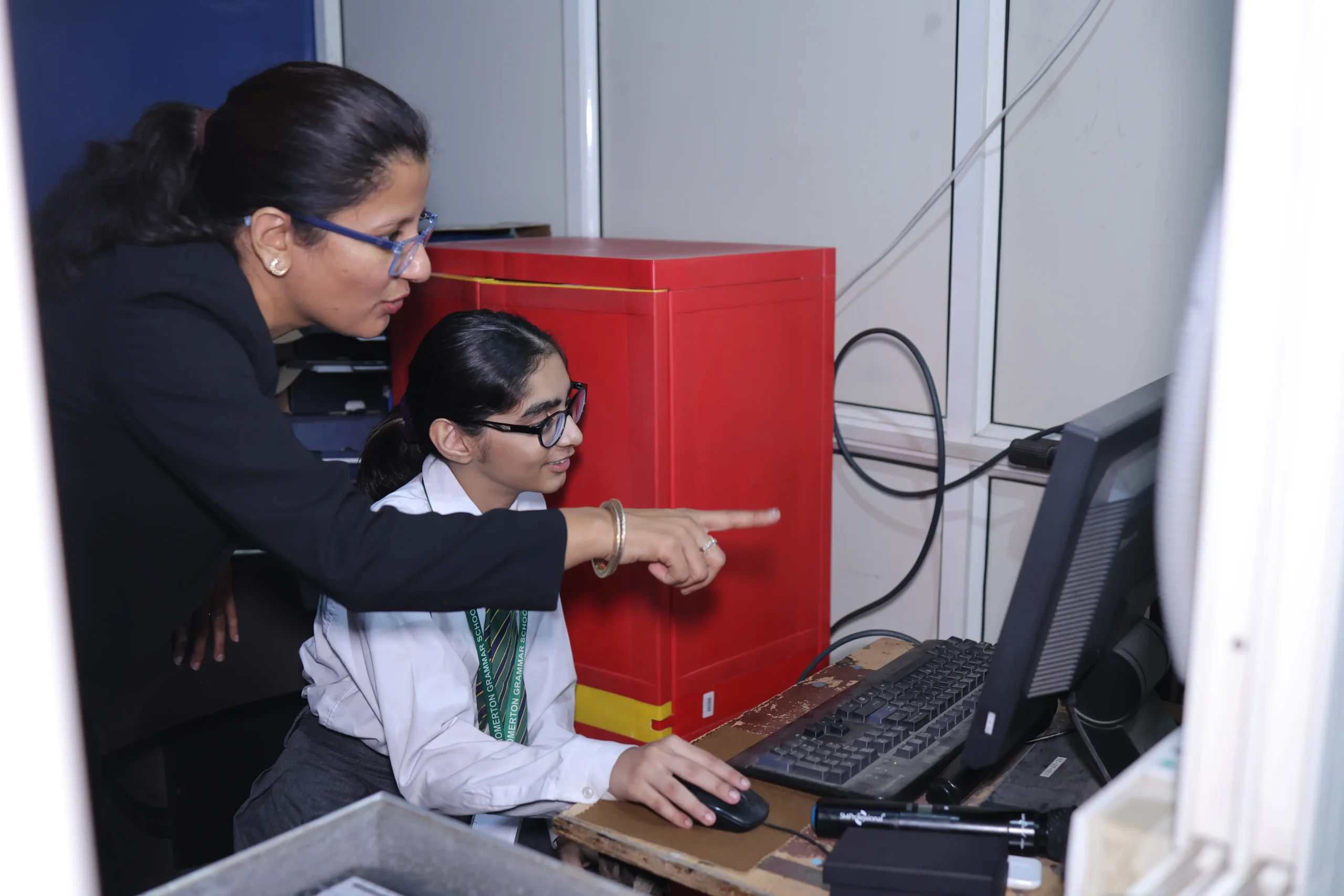
Choosing a school is an important decision parents make for their children. While academic results, infrastructure, sports facilities and extracurricular activities are important, one factor often makes a bigger difference to a child’s school experience – personalised learning.
Every child learns differently. Some students understand concepts quickly, while others need more time and practice. Some are naturally confident in the classroom, while others need encouragement before participating. Some children excel academically, while others discover their strengths through sports, music,art, technology or communication.
This is why parents searching for a CBSE school with personalised learning in Faridabad are increasingly looking beyond conventional measures of school performance. They want an environment where their child is recognised as an individual rather than simply being treated as one student in a large classroom.
A personalised approach to education can help students understand their strengths, work on their areas of improvement and develop greater confidence in their own abilities. At the same time, it can complement the CBSE curriculum by making learning more engaging, relevant and student-centred.
What is personalised learning?
Personalised learning is an educational approach in which teaching and learning are adapted to the needs, abilities, interests and pace of individual students. It does not mean that every child receives a completely different curriculum. Instead, teachers use different strategies, activities, resources and forms of support to help students learn effectively.
For example, one student may benefit from visual explanations, while another may understand a concept better through practical activities. A student who has already mastered a topic may need additional challenges, while another may require reinforcement and additional practice.
Personalised learning recognises these differences. It moves away from the idea that every student must learn in the same way and at the same pace.
Why is personalised learning important for children?
Children spend a significant part of their formative years in school. Their experiences during these years can influence their confidence, attitudes towards learning and willingness to take on challenges. A personalised learning environment can help children in several ways.
1. It recognises that every child is different
There is no single definition of an ideal learner. Children have different interests, personalities, strengths and learning preferences. Personalised education gives teachers opportunities to identify these differences and respond appropriately. A child who struggles with one subject may be exceptionally talented in another. A student who is quiet during classroom discussions may demonstrate excellent understanding through written work or project-based activities. Recognising these differences allows schools to support the whole child.
2. It helps teachers identify learning gaps
Personalised learning requires teachers to understand where each student stands academically. Regular assessments, classroom observations, assignments and discussions can help teachers identify areas where a student may require additional support. Instead of waiting until a major examination to discover that a child has not understood a concept, teachers can intervene earlier. This can make learning more effective and prevent small gaps from becoming larger challenges.
3. It allows students to learn at an appropriate pace
Not every child understands a concept at the same speed. Some students may grasp a mathematical concept after one explanation. Others may need additional examples, practice or one-to-one clarification. Personalised learning allows teachers to provide appropriate reinforcement without making students feel that they are falling behind. At the same time, students who learn quickly can be given opportunities to explore concepts at a deeper level. The objective is to ensure that every student continues progressing.
Personalised learning and the CBSE curriculum
The CBSE curriculum increasingly focuses on competency-based learning, conceptual understanding, critical thinking and the practical application of knowledge. This creates an opportunity for schools to move beyond traditional rote learning. Personalised learning can complement the CBSE approach by helping teachers understand how individual students engage with concepts.
Instead of focusing exclusively on memorising information, students can be encouraged to ask questions, analyse situations, solve problems and apply what they have learned. For parents looking for a CBSE school in Faridabad, it is therefore worth asking not only whether a school follows the CBSE curriculum but also how that curriculum is delivered.
What does personalised learning look like in a school?
Personalised learning can take many forms.
It may include:
- Individual academic support
- Small-group learning
- Differentiated classroom activities
- Regular assessments
- Individual feedback
- Mentoring
- Project-based learning
- Experiential learning
- Enrichment activities
- Technology-supported learning
- Career guidance
- Parent-teacher communication
The most effective approach often combines several of these strategies. Personalised learning is not a single programme. It is a philosophy that places the student’s needs at the centre of the learning process.
The role of teachers in personalised learning
Teachers are central to personalised education. Technology and educational resources can support learning, but teachers are the people who understand the context behind a student’s performance. A teacher may notice that a student is struggling not because they lack ability but because they are hesitant to ask questions. Another student may need more challenging tasks because the regular classroom work does not sufficiently engage them. Teachers who observe these differences can adapt their approach. This is why teacher-student interaction is an important consideration when choosing a school.
Parents should ask:
- How accessible are teachers to students?
- How frequently do teachers provide individual feedback?
- How does the school identify students who need additional support?
- Are enrichment opportunities available for students who need greater academic challenge?
- How does the school communicate a child’s progress to parents?
The answers can reveal a great deal about the school’s approach to personalised education.
Student-Teacher ratio and individual attention
Class size can influence the amount of individual interaction students receive. A smaller student-teacher ratio can make it easier for teachers to observe students, respond to questions and provide feedback. However, the ratio alone does not guarantee personalised learning.
Teaching practices matter just as much. A school with effective mentoring, regular assessments, differentiated instruction and strong teacher-student relationships may be better positioned to provide individual attention. Therefore, parents should look beyond numbers and understand how teachers actually interact with students.
Personalised learning builds confidence
Academic support is only one part of personalised education. Personalised learning can also influence how children see themselves as learners. When students receive appropriate support and experience progress, they may become more confident in their abilities. A child who previously avoided answering questions may gradually begin participating in discussions.
A student who struggled with a particular subject may become more willing to attempt challenging problems after receiving targeted support. This confidence can extend beyond academics.
Students who believe they can learn and improve may be more willing to participate in sports, public speaking, theatre, technology projects and leadership activities.
Learning beyond textbooks
Personalised learning should not be restricted to academic subjects. Children have different interests, and schools can provide opportunities for them to explore these interests.
Sports can help students develop discipline and teamwork. Music can encourage creativity and expression. Theatre can build confidence and communication skills. Robotics and coding can develop problem-solving abilities. Art can provide a channel for creative expression. Leadership activities can encourage responsibility and decision-making.
A school that provides diverse opportunities allows children to discover strengths that may not be visible through examination scores alone.
The importance of experiential learning
Children often learn more effectively when they can connect concepts to real-world experiences. Experiential learning can include laboratory experiments, projects, field visits, presentations, demonstrations, performances and collaborative assignments. For example, a science concept becomes more tangible when students conduct an experiment. A history lesson can become more engaging when students recreate a historical event through theatre. A mathematics concept can become more meaningful when students apply it to a practical situation. Personalised learning and experiential learning can work together by allowing students to engage with concepts through different methods.
Technology can support personalised learning
Technology can play a useful role in personalised education when it is used thoughtfully. Digital learning resources can provide students with additional explanations, practice exercises, simulations and interactive content. Technology can also help teachers track student progress and identify areas that may require additional attention. However, technology should support teachers rather than replace them. The human relationship between teacher and student remains central to effective education. Schools can use technology to expand learning opportunities while maintaining meaningful personal interaction.
Career guidance as part of personalised education
As students move into secondary and senior secondary classes, personalised education should also include guidance about future academic and career choices. Students may have different interests and aspirations. One student may be interested in engineering. Another may prefer medicine, design, law, psychology, business, hospitality, media, sports or technology. Career counselling can help students understand their interests, strengths and possible pathways. This is particularly useful for students approaching important decisions about subjects and streams. A school that provides career guidance demonstrates that personalised education extends beyond classroom performance to the student’s long-term development.
Personalised learning for different age groups
The needs of children change as they grow.
Primary School: Younger children benefit from engaging activities, foundational skills, play-based learning and individual encouragement. Teachers can focus on building curiosity, communication and positive learning habits.
Middle School: Students begin developing more independent learning habits. Personalised support can help them identify strengths, address academic gaps and explore new interests. This is also an important stage for developing confidence and critical thinking.
Secondary School: Academic expectations increase, while students begin considering future subject choices. Personalised mentoring and career exploration can become increasingly valuable.
Senior Secondary School: Students need focused academic preparation along with guidance about higher education and careers. Individual support can help students manage academic expectations while making informed decisions about their future.
How does Homerton Grammar School approach holistic and personalised education?
For parents exploring a CBSE school with personalised learning in Faridabad, Homerton Grammar School is one school worth considering. Located in Sector 21A, Faridabad, Homerton Grammar School combines CBSE academics with opportunities across sports, arts, technology, leadership and career guidance. The school’s approach recognises that education involves more than examination preparation.
Students are encouraged to participate in different activities and discover their individual interests and strengths. The school also places emphasis on teacher-student interaction, mentoring and academic support. Its facilities include science laboratories, a library, Robotics & AI learning spaces, music and dance studios and extensive sports infrastructure. This broader environment can give students opportunities to learn in different ways.
Sports as a personalised learning opportunity
Sports are particularly valuable because children can discover abilities outside traditional academics. At Homerton Grammar School, students have opportunities to participate in sports such as cricket, football, badminton, lawn tennis, gymnastics, athletics, table tennis and pickleball. For some children, sport may become an important avenue for confidence and self-expression. Structured sports coaching can also teach discipline, teamwork, resilience and responsibility. Giving children opportunities to choose activities based on their interests is an important part of creating a well-rounded learning environment.
Personalised attention and parent-school collaboration
Parents play an important role in personalised education. Teachers see children in the classroom, while parents understand their behaviour, interests and learning patterns at home. Regular communication between the two can provide a more complete picture of a child’s development. Parents should therefore look for schools where communication is encouraged and where discussions extend beyond marks.
Questions worth discussing include:
- What are my child’s strengths?
- Where does my child need support?
- How is my child progressing?
- What activities might suit my child’s interests?
- How can we support learning at home?
- What future pathways might be appropriate?
These conversations can help create a stronger support system around the child.
How parents can identify a school that truly offers personalised learning?
If you are searching for a CBSE school with personalised learning in Faridabad, consider these factors during school visits.
Look at classroom interaction: Observe whether teachers engage with individual students or primarily address the class as a whole.
Ask about academic support: Find out how the school supports students who require additional help.
Ask about enrichment: Ask how the school challenges students who are academically advanced.
Explore activities: Check whether children can explore sports, arts, technology, leadership and other interests.
Understand assessment practices: Ask how frequently student progress is reviewed and how feedback is provided.
Discuss career guidance: For older students, understand how the school supports subject selection and career planning.
Speak to teachers: A conversation with teachers can provide valuable insight into the school’s educational philosophy.
Why personalised learning matters for the future?
The future will require people who can learn continuously. Knowledge changes rapidly. Technologies evolve. New professions emerge. Skills that are valuable today may change tomorrow. Children therefore need more than the ability to memorise information.
They need curiosity. They need adaptability. They need communication skills. They need creativity. They need resilience. They need collaboration. And most importantly, they need the confidence to keep learning.
Personalised education can help develop these qualities by recognising children as individuals and supporting their growth accordingly.
Choosing the right CBSE school in Faridabad
There are many CBSE schools in Faridabad, and each school has its own strengths. Parents should consider academic performance, infrastructure, location, fees, sports, activities, safety and facilities. But personalised learning deserves a place on that list.
A school may have excellent infrastructure, but parents should also ask how that infrastructure is used to benefit students. A school may have strong board results, but parents should also ask how it supports children who learn differently. A school may offer many extracurricular activities, but parents should ask whether students genuinely have opportunities to explore their interests. The best school for a child is ultimately one that understands that education is personal.
Conclusion
Finding the right CBSE school with personalised learning in Faridabad involves looking beyond marks and facilities. Children need teachers who understand them, environments that encourage them and opportunities that allow them to discover their strengths.
Personalised learning can help students receive the academic support they need while also developing confidence, creativity, communication skills, resilience and independence.
At Homerton Grammar School, the focus extends beyond delivering a curriculum. The school aims to create an environment where students can learn, explore, participate and grow across different areas of life. For parents, the most important question is not simply whether a school can help a child score well. It is whether the school can help the child become a confident, capable and curious learner.
Because every child learns differently. And every child deserves an education that recognises that difference.